
SDSU VISTA Program
Valuing Incarcerated Scholars through Academia
About the Program
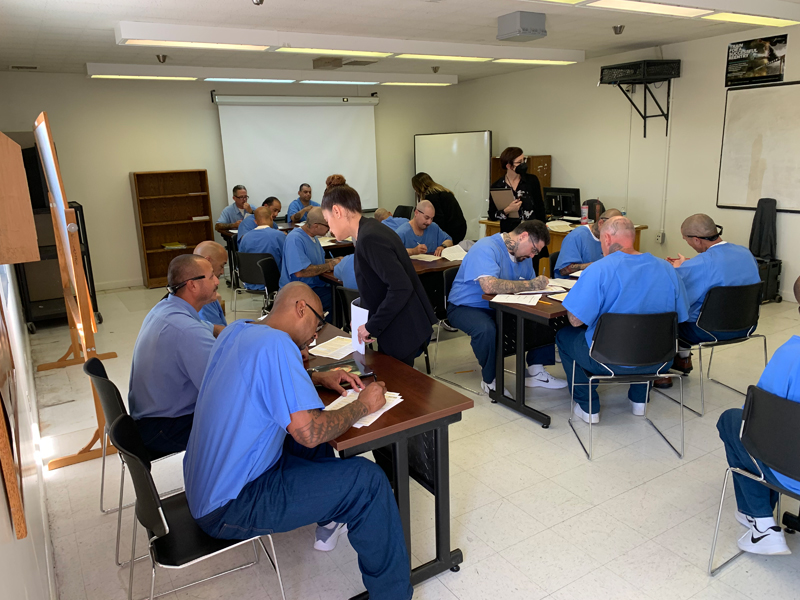
SDSU’s Valuing Incarcerated Scholars Through Academia launched in 2023 with a BA degree in Interdisciplinary Studies at Centinela State Prison. This program embodies SDSU’s belief that education transforms lives, fostering growth, leadership, and community inside and outside prison walls.
Overview
The VISTA program mirrors the academic rigor of SDSU’s main campus, offering a two-year completion BA degrees designed for in-prison learning environments. The program is the result of a cross-state initiative with CDCR and collaboration among units across SDSU, primarily Global Campus, SDSU’s extension program. The degrees offered include Interdisciplinary Studies (2023), Journalism (2024), and Humanities (still in development). There are currently 69 enrolled students across two facilities (yards).
Highlights
- 96.8% of students in the first cohort made the Dean’s List
- 100% of students in the second cohort made the Dean’s List the first semester
- All of the paroled students (3) are continuing their degrees within the CSU system
- Inaugural VISTA graduation: May 15, 2025
Team
Faculty are a balance of tenure track SDSU faculty, lecturers from SDSU, outside lecturers, and faculty who are formerly incarcerated themselves. Team also includes a director and coordinator, with further support from: advisor, financial aid, enrollment, student assistants, and Mellon fellows.
CDCR-CSU
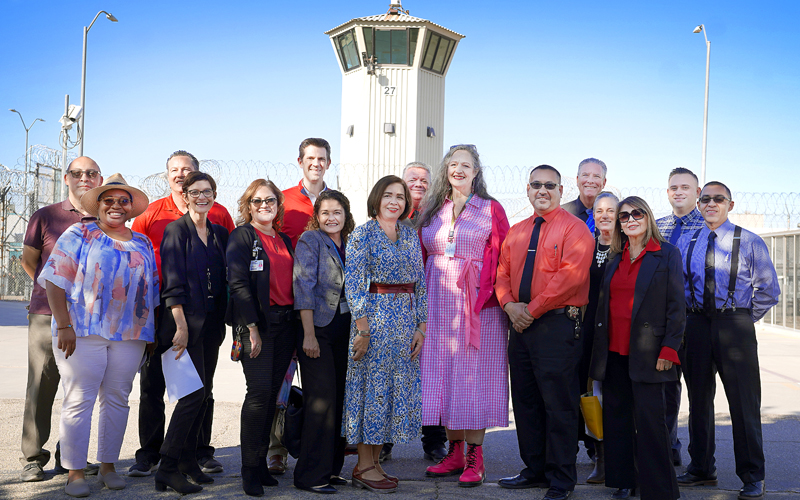
This program is the result of a unique partnership between CDCR and the CSU. SDSU-VISTA is one of ten degree programs offered by CSU campuses within CDCR. This unique partnership between CDCR and the CSU system allows students across California to access higher education while incarcerated.
Additional Funding
In addition to CDCR, VISTA has three sources of additional funding:
- Pell: SDSU is among the first universities in the country to be accepted as a Prison Education Program in August 2024, allowing eligible students access to Pell funding.
- Between 2022 and 2024, SDSU was part of the federal Second Chance Pell program.
- Mellon Foundation: SDSU received a grant for vital wraparound services and tools for best practices of holistic higher education in prison from the Mellon Foundation in 2023. This is led by the VISTA director with an interdisciplinary team of scholars.
Impact
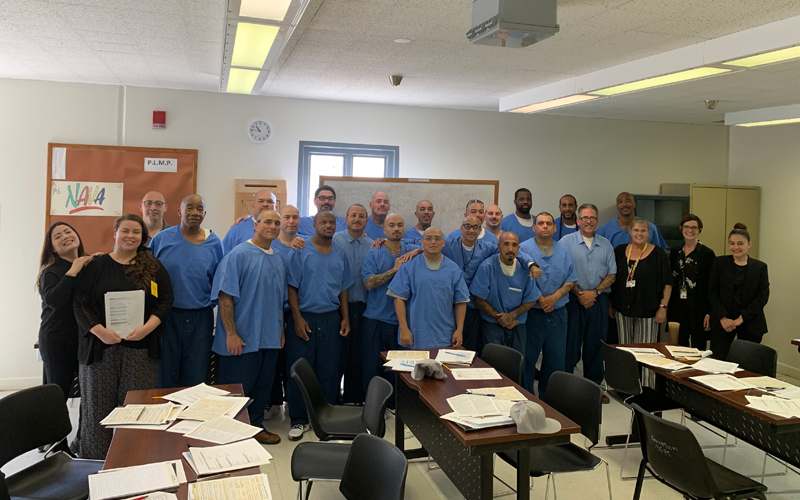
Providing education in prison is proven to reduce recidivism rates and is associated with higher employment rates, which will improve public safety and allow individuals to return home to their communities. A 2018 study from the RAND Corporation, funded by the Department of Justice, found that incarcerated individuals who participated in correctional education were 48% less likely to return to prison within three years than incarcerated individuals who did not. RAND also estimated that for every dollar invested in correctional education programs, four to five dollars are saved on three-year re-incarceration costs.
Visit the Holistic Learning in Higher Education in Prisons page to learn about how the VISTA team will work collaboratively to create a holistic higher education model that prioritizes not only academic success, but also social and emotional wellbeing.
Join Our Teaching Team!
SDSU's Valuing Incarcerated Scholars Through Academia is hiring faculty for upcoming classes. Seeking faculty in Journalism & Media Studies, Communication, Design, and General Education. Apply at the link below join our team.
Join Our Teaching Team!
SDSU's Valuing Incarcerated Scholars Through Academia is hiring faculty for upcoming classes. Seeking faculty in Journalism & Media Studies, Communication, Design, and General Education. Apply at the link below join our team.
Related Articles
SDSU celebrates first graduating class of incarcerated students, Danielle Dawson, May 19, 2025, FOX 5 / KUSI News
‘New opportunity in life’ – graduates complete SDSU program for incarcerated students, Jennifer Vigil, May 17, 2025, Times of San Diego
"Higher Education within prison is a reality”: VISTA student shared their perspective, Shawn Powell, February 18, 2025, The Daily Aztec
SDSU VISTA: Valuing Incarcerated Scholars through Academia, Nadine Ilaian, October 10, 2024, SDSU News Center
Unlocking Potential: San Diego State University Students Travel to Centinela State Prison for Interactive Dialogue, Silas M. Johnson, August 20, 2024, PSFA News
Centinela prison B.A. program to expand under $1 million Mellon Foundation grant, Jeff Ristine, March 12, 2024
Program Photos
SDSU-VISTA Graduation at Centinela State Prison (D yard, Interdisciplinary Studies) - May 2025
SDSU-VISTA Graduation at Centinela State Prison, (B yard, Interdisciplinary Studies) - May 2025
SDSU-VISTA at Centinela State Prison (D-yard, Journalism students) - August 2024
SDSU-VISTA at Centinela State Prison (B-yard, Journalism students) - August 2024
SDSU-VISTA at Centinela State Prison (D-yard, Interdisciplinary Studies) - August 2024
SDSU-VISTA at Centinela State Prison (B-yard, Interdisciplinary Studies) - August 2024
Becoming part of this program to expand access to higher education is a natural extension of the excellent research, scholarship and creative activities of our faculty – many of whom have for years worked with incarcerated and formerly incarcerated individuals to reduce recidivism, celebrate the arts and develop pathways to higher education.
—Hala Madanat, Vice President for Research and Innovation at SDSU
Nothing surpasses higher education in its potential to transform the lives of justice-impacted individuals and communities.
—Alan Mobley, Associate Professor and founding Executive Director, SDSU Project Rebound and the Center for Transformative Justice